



Last month we hosted a dinner at Central Park Club with leaders from bulge-bracket banks, global asset managers, and some of the largest private credit funds active in asset-backed finance. We picked the guest list carefully. Our goal: get the people who fund, manage, and monitor asset-backed deals in one room and find out what keeps them up at night.
Here’s what we heard.

Fraud risk remains front and center.
Tricolor and First Brands are old news. The aftershocks are not. Every table raised the same concern: the next blowup is a matter of when, not if. Reputational risk dominated the conversation, particularly among fund managers who answer to LPs rather than depositors. Several described pushing background checks earlier in the deal process instead of waiting until closing.
Asset and portfolio managers told us they see a narrow window where executives will approve spending on controls and infrastructure. Internal approval cycles haven’t caught up to the urgency.
Existing service providers aren’t cutting it.
Many custodians, trustees, and backup servicers are clunky, slow, and insufficient to prevent fraud and mistakes. Several firms described parallel evaluations of multiple platforms. The preference: build internally or adopt new technology.
Cash reconciliation came up repeatedly. Most firms still rely on manual, point-in-time processes. A real-time cash reconciliation tool would add meaningful fraud protection.
We also heard growing interest in AI-powered verification agents as a new standard on deal transactions. A third party could verify calculations and asset data integrity in real time, not after the fact. The current model: expensive humans doing periodic spot checks. It doesn’t scale and doesn’t catch problems fast enough.
Everyone agrees the market needs new standards. No one wants to go first.
This was the most revealing part of the evening. The market has a coordination problem, not a willingness problem.
Lenders lack leverage. Banks fear losing deal flow by requiring what competitors don’t. Everyone waits for the industry to move, so no one moves first. Several attendees said they would adopt new standards tomorrow if the rest of the street did the same.
Vendor procurement compounds the problem. Deal-making teams at banks described onboarding new technology as a distraction from their actual job. Once executives sign off on new tools, the internal machinery to approve and implement them grinds slowly.
The result: an industry stuck in patterns it knows aren’t sufficient. Not because firms lack urgency or willingness, but because the incentive structure punishes whoever moves first. The market needs a neutral standard-setter that allows firms to adopt better controls without unilateral risk.

AI is being adopted for productivity, not yet for risk.
Every firm at the dinner uses AI. None use it for hard problems.
Ad hoc adoption for productivity gains is universal. Programmatic deployment for portfolio insights or risk management is nonexistent. Banks face the tightest restrictions, but most provide access to LLM chatbots. Private credit firms have more latitude.
The loudest demand was mundane but important: document organization. Saving deal documents to the right folders. Normalizing large volumes of servicer reports, asset tapes, and financial statements. The volume of unstructured data in asset-backed finance is staggering. Most firms manage it with manual processes that don’t scale.
For productivity, AI is a clear win. For risk, firms want proof before they commit. The cost of a wrong answer is too high. Risk assessment, compliance workflows, and portfolio monitoring: the room wasn’t ready to trust AI with decisions that carry real consequences.
The most provocative concern came last. Several attendees worried that AI, by automating the manual work junior professionals cut their teeth on, could hollow out the next generation of leaders. This tension won’t resolve itself. Firms that adopt AI need to be deliberate about how they train the people who will eventually run their desks.
Our view: never let a good crisis go to waste.
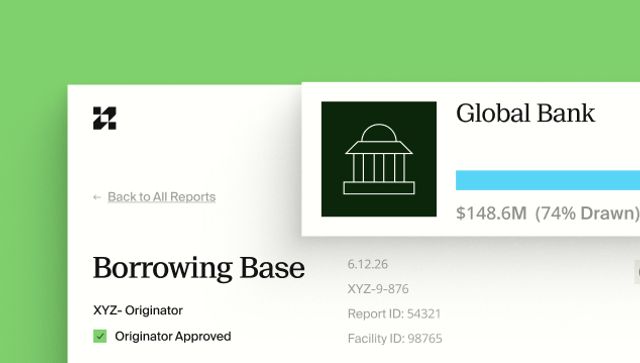
Capital providers are right to worry. Setpoint reviews borrower-provided funding requests on behalf of capital providers. Across thousands of reports, we find issues more than 7% of the time. When we use AI and experts to verify documents against loan tape data, 37% of assets show a data anomaly. Asset-backed finance is built on secured interests. When the data underneath is wrong or manipulated, those interests can vanish.
We hosted this dinner because the ABF market is at an inflection point. Urgency on one side, possibility on the other, and a widening gap in between: outdated vendors, fragile infrastructure, competitive dynamics that reward inertia, and procurement processes that grind when they should sprint.
The path forward requires three things: real-time verification of collateral data and calculations on every deal, not periodic spot checks after the fact; portfolio management tools that combine purpose-built AI with experts-in-the-loop to surface insights and flag risk; and access to cross-borrower data that prevents double pledging before it happens. These tools work best when provided by an independent third party. When verification, monitoring, and data sit outside the lender-borrower relationship, competitive dynamics stop being an excuse for inaction.
Setpoint exists to close that gap. If you’re a capital provider or originator thinking about these problems, we’d like to hear from you.